
For more than a century, manganese has quietly underpinned Ghana’s mining legacy. Today, the sector stands at a strategic turning point. From the historic open-pit mine at Nsuta to ambitious plans for a state-backed manganese refinery, Ghana’s manganese industry could re-emerge as a cornerstone of economic diversification, industrialisation, and value-added mining.
A Storied Past — and a Single Dominant Producer
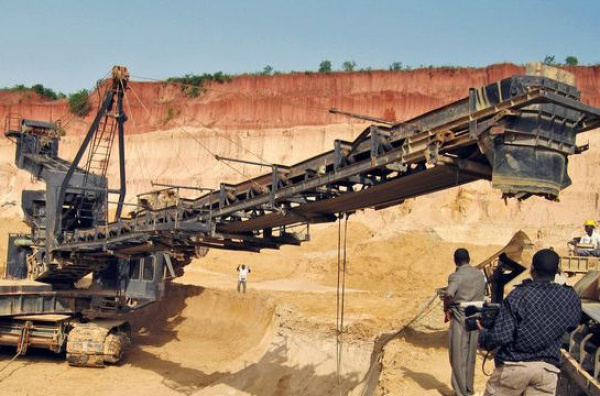
Ghana’s manganese industry is anchored by Ghana Manganese Company Limited (GMC), operator of the historic Nsuta mine in the Western Region. GMC holds a concession covering approximately 170 square kilometres, yet official figures indicate that less than 3% of the concession has been mined, highlighting the scale of untapped manganese reserves available for future development.
The Nsuta deposit is internationally recognised for its high-grade manganese carbonate ore, characterised by:
- An exceptionally high manganese-to-iron ratio (Mn:Fe ~ 31)
- Low impurity levels, including phosphorus and alumina
- Strong suitability for ferroalloys, steelmaking, and manganese metal production
These qualities make Ghanaian manganese highly competitive on the global market.
Production and Export Trends
After periods of volatility, manganese production in Ghana has rebounded strongly. In 2022 and early 2023, output reached approximately 3.07 million tonnes, reflecting improved operational stability and global demand recovery.
Looking ahead, the Ghana Chamber of Mines projected that manganese production could exceed 5 million tonnes in 2024, marking a significant increase and reinforcing renewed investor confidence in the sector.
Ghana consistently ranks among Africa’s leading manganese producers, alongside Gabon and South Africa, and remains a key supplier to international steel and alloy markets.
Industrialisation on the Horizon: Ghana’s Manganese Refinery Plan
In a major policy shift, the Government of Ghana announced plans in 2024, in partnership with a Chinese firm to develop the country’s first large-scale manganese refinery near Nsuta. The proposed US$450 million facility aims to process raw manganese ore domestically, producing higher-value manganese products for export and industrial use.
According to the Minerals Commission of Ghana, domestic refining could:
- Increase national revenue from manganese by up to 40%
- Create thousands of direct and indirect jobs
- Strengthen Ghana’s position in regional and global mineral value chains
If implemented successfully, the refinery would mark a decisive transition from raw ore exports to value-added mineral processing, aligning with Ghana’s broader industrialisation agenda.
Read more about A Complete Guide for Investors and Operators
Why Manganese Matters to Ghana’s Economy
Manganese is a strategic industrial mineral with growing global importance. It is essential for:
- Steel production (where over 90% of manganese is consumed)
- Alloy manufacturing
- Battery technologies, including emerging lithium-ion chemistries
As the global energy transition accelerates, demand for battery-grade and processed manganese is expected to rise. This positions Ghana to leverage its natural endowment beyond traditional exports such as gold and cocoa.
For Ghana, manganese offers a pathway to:
- Economic diversification
- Foreign exchange stability
- Industrial job creation
- Stronger downstream manufacturing linkages
Challenges and the Road Ahead
Despite the opportunity, the sector’s transformation is not guaranteed. Key challenges include:
- Infrastructure and logistics: Efficient transport from Nsuta to ports remains critical to competitiveness.
- Regulatory stability and community engagement: Long-term success depends on predictable policy, environmental stewardship, and shared benefits for host communities.
- Commodity price volatility: Global manganese prices have historically affected production levels and investment cycles.
- Domestic value-addition capacity: Refining and downstream industries must be deliberately supported to retain economic value within Ghana.
Addressing these factors will determine whether Ghana’s manganese ambitions translate into lasting industrial gains.
Conclusion: A Strategic Pivot Point for Ghana’s Mining Sector
Ghana’s manganese industry is at a pivotal moment. With vast unexploited reserves, improving production trends, and plans for domestic refining, the sector presents a real opportunity for industrial renewal.
If refinery development progresses and policy support remains consistent, Ghana could evolve from a raw manganese exporter into a competitive global supplier of processed manganese products boosting exports, creating skilled jobs, and strengthening long-term economic resilience.
The coming years will determine whether manganese remains a historical footnote in Ghana’s mining story or becomes a foundation for a more diversified and industrialized mining future.


One thought on “Ghana’s Manganese Industry: From Historic Roots to a New Era of Industrial Growth”