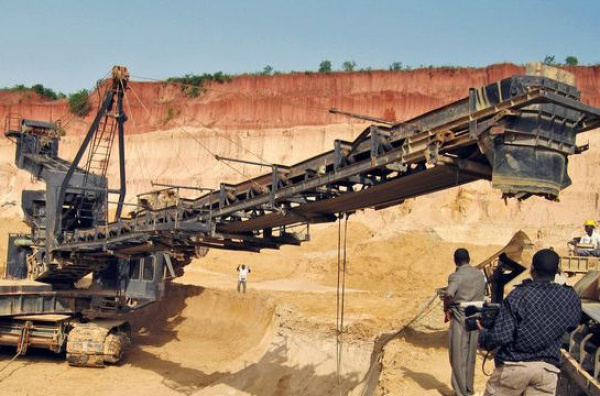
Ghana’s salt industry is quietly staging a comeback. Long overshadowed by gold and cocoa, salt, produced mainly by solar evaporation along the coast, has begun attracting renewed policy attention, private investment and public debate. Once a largely artisanal sector supplying local markets, salt is now cast by policymakers and investors as a strategic raw material with export potential, industrial applications and the capacity to support coastal livelihoods — provided controversies around land rights, community inclusion and environmental protection are resolved. (Modern Ghana)
Production, potential and the Ada Songor story
Production in Ghana has historically been modest compared with the country’s geological potential. Recent sector summaries place annual output at roughly 200,000–300,000 tonnes, largely from small-scale salt pans in Ada, Keta, Saltpond and parts of the Central and Volta regions. (Modern Ghana)
The largest single resource is the Songor Lagoon at Ada. The lagoon and its surrounding pans were nationalised decades ago and have long been a focus of both smallholder livelihoods and industrial ambition. In recent years, ElectroChem Ghana Limited (part of the McDan Group) secured a large concession — reportedly about 41,000 acres at Ada Songor — and has outlined plans to scale production dramatically, targeting a million-tonne capacity to supply both domestic and regional industrial demand. ElectroChem and other stakeholders argue that industrial-scale development could transform Ghana into a major West African salt supplier. (Electrochem Ghana)
The sector’s macro potential is striking. Regional industrial demand for salt — used in food processing, water treatment, chemicals and oilfield services — runs into millions of tonnes annually. Analysts and advocacy groups have projected that with focused investment and proper governance, Ghana could unlock significant foreign exchange from salt, with some policy briefs suggesting multi-hundred-million-dollar to billion-dollar upside by the end of the decade. (ScienceDirect)
The social fault lines: smallholders, rights and protests
Yet the path to scaling up is politically and socially contested. Songor’s history is complicated: state interventions, historical leases and community associations have produced a patchwork of claims. When private companies moved to operate at Songor, long-standing artisanal miners and local communities resisted, citing loss of access, limited consultation and weak benefit-sharing. Tensions have periodically erupted into protests and equipment seizures; in 2024–2025, there were multiple reported confrontations between company facilities and local protesters calling for a review of concessions and more direct benefits for indigenous salt harvesters. (The Fourth Estate)
These disputes underline a central governance challenge: how to reconcile industrial ambitions with customary land rights and the livelihoods of thousands who depend on artisanal salt pans. For policymakers, the test is twofold — craft investment-friendly frameworks that protect large capital flows while guaranteeing local participation, fair compensation and transparent environmental safeguards.
Environmental considerations and value-chain choices
Salt production by solar evaporation is relatively low-carbon compared with some extractive industries, but it is not impact-free. Lagoon ecology, mangrove buffers and coastal hydrology can all be altered by large-scale pans and associated infrastructure. The proposed move into refining and chlor-alkali processing raises additional environmental and waste-management questions. Independent environmental impact assessments (EIAs), strict enforcement of mitigation measures and carefully designed reclamation plans will be essential if expansion is to be sustainable. (Salt Governance Ghana)
Beyond extraction, value addition is the sector’s most critical strategic lever. Exporting raw salt captures a small share of total value. Building downstream capacity — from industrial salt for water treatment and oilfield use to chlor-alkali and other chemical derivatives — would multiply economic benefits, create skilled jobs and reduce exposure to commodity price cycles. Ghana’s Integrated Industrial Strategy and investor roadmaps have pointed to this value-chain approach, but execution requires capital, reliable logistics (ports and roads), and steady offtake agreements with regional buyers. (Miif)
Policy choices and the investor case
A few policy priorities stand out as immediate enablers:
- Clarify and codify access rights: Transparent, legally sound concessioning that recognizes customary use and includes formal benefit-sharing clauses will reduce conflict risk. (Salt Governance Ghana)
- Support artisanal producers: Technical assistance, access to iodization equipment and aggregation facilities can help small producers increase quality and secure higher margins. (ScienceDirect)
- Invest in value addition and logistics: Incentives for local refining, reliable power and port upgrades will make large-scale projects commercially viable and locally transformative. (GEPA Exporters Portal)
- Enforce environmental and social safeguards: Rigorous EIAs, independent monitoring and clear remediation bonds must be mandatory for any large concession. (Salt Governance Ghana)
For investors, Ghana offers a compelling value proposition: sizeable resource endowments, proximity to a large regional market (notably Nigeria), and an improving policy narrative that links mineral resource development with industrialisation. However, commercial success will hinge on social licence — the degree to which projects secure genuine community acceptance and manage the socio-ecological impacts.
Conclusion — a sector at a crossroads
Ghana’s salt industry sits at an inflection point. The combination of private capital, a supportive industrial agenda and clear regional demand could finally turn Ghana into a major salt exporter. But ambition must be tempered by responsibility: without robust governance, clear benefit-sharing and environmental stewardship, the drive for scale risks reigniting community conflict and undermining long-term viability.
If stakeholders can stitch together investment, inclusive policy and environmental care, Ghana’s coastal pans could become a stable source of jobs, exports and industrial feedstock — a quiet but powerful engine for coastal economies.
References
ElectroChem Ghana Limited. “Salt Mining Company / Ada Songor concession.” Electrochem Ghana. (Electrochem Ghana)
JT Mensah, Ghana’s salt industry: A neglected sector for economic development, Elsevier / FAO records. (ScienceDirect)
GEPAG / IMANI policy brief on Ghana’s salt potential (“US$1 billion annual salt revenue by 2028”). (GEPA Exporters Portal)
Graphic Online, “Protesters vandalize Electrochem’s facilities at Ada Songor Lagoon.” (Jan 2025). (Graphic Online)
The Fourth Estate, “Ada salt miners regain economic survival after investigations.” (Apr 2025). (The Fourth Estate)