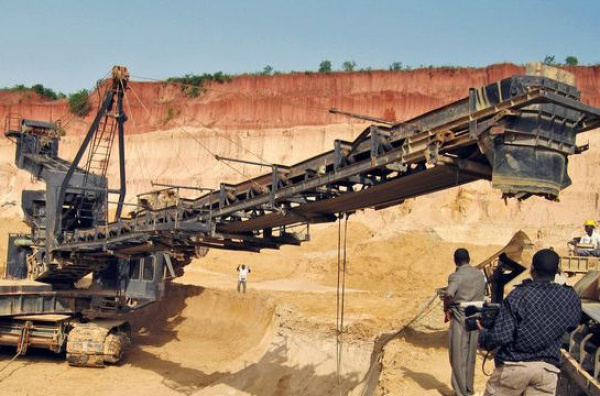
Togo may occupy a small footprint in West Africa, but its mineral endowment carries outsized economic importance. For decades, the country’s mining sector has been defined almost entirely by phosphate, a low-visibility but globally strategic mineral that anchors exports and supports agricultural supply chains worldwide.
Yet beyond phosphate, Togo hosts a broader, if underdeveloped, mineral inventory, including limestone, gold, diamonds, manganese, iron ore, bauxite, rutile and gypsum. As government policy shifts toward value addition and industrialization, the central question is whether Togo can convert mineral extraction into long-term economic value, jobs and improved local outcomes rather than remaining a raw-material exporter. (EITI)
Phosphate: The Anchor Commodity
Phosphate rock remains the backbone of Togo’s extractive industry. The sector is dominated by the state-owned Société Nouvelle des Phosphates du Togo (SNPT), which operates the Hahotoé–Kpémé phosphate basin and coastal processing facilities at Kpémé.
According to Extractive Industries Transparency Initiative (EITI) data, phosphate rock production stood at approximately 1.5 million tonnes in 2022, reaffirming phosphate as the country’s primary mined commodity and one of its most important export earners. (EITI)
In policy terms, phosphate is also Togo’s clearest lever for industrial development. Government strategy increasingly emphasises downstream processing, particularly fertiliser production, as a means to increase export value, reduce fertiliser imports and support domestic agriculture. Regional and international investors have expressed interest, though financing, infrastructure and environmental compliance remain key constraints. (Fondation FARM)
Industrial Minerals: Limestone and Cement Capacity
Beyond phosphate, limestone represents the second major pillar of Togo’s mining economy. Extensive deposits in the Tabligbo basin underpin domestic cement production.
Over the past decade, cement capacity has expanded through clinker production and grinding facilities, helping to meet domestic construction demand and limit imports. While less visible than phosphate exports, cement and associated industrial minerals play a strategic role in national infrastructure development and urban growth.
Gold and Diamonds: Small-Scale Production, Local Impact
Togo hosts gold and diamond occurrences, primarily in the northern regions within the Birimian Greenstone Belt. Commercial production remains modest by regional standards, but artisanal and small-scale mining (ASM) supports local livelihoods and contributes to rural economies.
Diamond production has fluctuated, and as in much of West Africa, informal mining complicates accurate production and revenue reporting. While these resources are unlikely to transform national export figures in the near term, they remain relevant from a local development and regulatory standpoint.
Underexplored Potential: Manganese, Iron and Bauxite
Geological surveys and exploration activity have identified manganese, iron ore, bauxite, rutile and gypsum across several parts of Togo. Most projects remain at the exploration or prefeasibility stage, with limited infrastructure and financing progress to date.
International junior miners, particularly in manganese exploration in northern Togo have maintained intermittent interest. If advanced, these projects could diversify export earnings beyond phosphate and cement, but would face challenges related to logistics, permitting, community engagement and capital access.
Read about Ghana’s Manganese Industry
Economic Role: Strategic, but Narrow
Despite its export significance, mining contributes a relatively small share of GDP compared with agriculture and services. However, phosphate consistently accounts for a notable portion of merchandise exports, reinforcing the sector’s importance for foreign exchange earnings.
Production stability — around 1.5 million tonnes of phosphate rock in 2022 — highlights mining’s resilience, even as its broader economic footprint remains concentrated in a few commodities. (EITI)
Environmental and Social Considerations
Mining activity — particularly phosphate extraction and coastal processing — has generated long-standing environmental and health concerns in communities around Hahotoé and Kpémé. Reported issues include dust emissions, water contamination and potential heavy-metal exposure.
As Togo considers expanding phosphate production and downstream processing, environmental management and community relations will be critical. Failure to address these risks could undermine social licence and delay future investment. (EJ Atlas)
International partners, including the World Bank, have supported governance reforms aimed at improving oversight, transparency and benefit-sharing. Nonetheless, institutional capacity remains a key bottleneck. (World Bank)
Policy Direction: From Extraction to Value Addition
Togo’s strategic choice mirrors a wider African mining debate: export raw materials or invest in local processing.
Recent policy signals and private-sector discussions suggest gradual movement toward domestic fertiliser production and expanded cement capacity. However, achieving this transition will require sustained capital investment, reliable infrastructure, technology transfer and enforceable environmental standards. (Fondation FARM)
Outlook: Measured Growth, Structural Limits
Short term: Phosphate will remain the dominant commodity, with cement and limestone supporting domestic construction. (EITI)
Medium term: Successful development of manganese, iron or bauxite projects could broaden the sector — though progress will depend on financing, infrastructure and regulatory clarity. (African Mining)
Key priority: Strengthening permitting, environmental monitoring and revenue transparency to ensure mining supports inclusive economic development. (World Bank)
Conclusion
Togo’s mining sector is defined by phosphate — a globally significant commodity that continues to anchor exports and shape industrial policy. At the same time, a quieter portfolio of industrial and metallic minerals offers diversification potential if supported by credible investment frameworks and stronger governance.
For Togo, the opportunity is not simply to mine more, but to mine smarter adding value, reducing environmental risk and ensuring that mineral wealth delivers tangible national and local benefits.