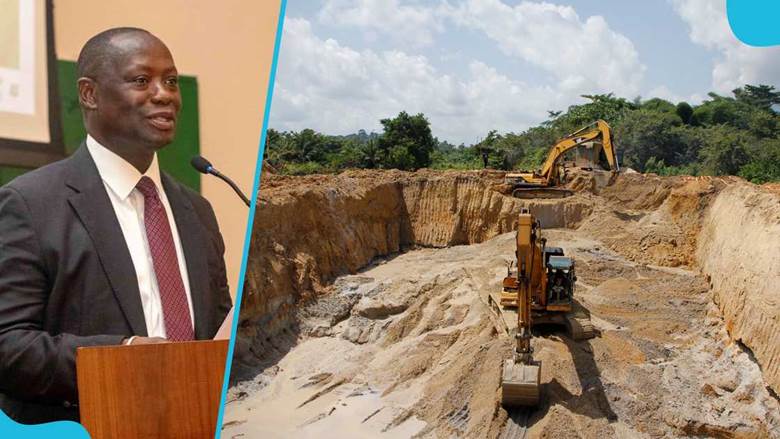
Ghana’s Ministry of Lands and Natural Resources unveiled plans this week to table a new mineral-royalties bill in Parliament — a move that could reshape how the state captures value from its mines. The proposed instrument would replace today’s largely fixed-rate approach with a sliding-scale royalties regime that adjusts rates according to commodity prices, output and other project metrics. The minister described the reform as a long-term framework covering all minerals — not only lithium — and said it was being prepared with the Attorney-General before Cabinet and Parliamentary scrutiny. (CitiNewsroom.com)
Why change the system now? Ghana’s mining sector is experiencing both a commodity upcycle and reforms aimed at boosting local benefit-capture. Under the current legal framework, mineral royalty rates are generally capped (commonly at 5% of gross revenue), a rate critics say is insufficient during boom prices. A sliding-scale model would allow royalties to rise when commodity prices surge and ease when markets soften, giving the government a more dynamic revenue stream while signalling a willingness to share cyclical returns with investors. (Ghana Revenue Authority)
Immediate implications for mining companies
For large miners and explorers, the change introduces both opportunity and uncertainty. On the upside, a transparent sliding scale can be predictable if the triggers (price bands, production thresholds, profit margins) are clearly defined and published. It also removes the blunt instrument of ad-hoc increases and can make revenue flows more responsive to market realities — potentially reducing the pressure for sudden tax hikes during booms. But if the formula is set aggressively, companies could see materially higher costs at the top of price cycles, which would compress margins and potentially affect project economics and future investment decisions. Market sensitivity analyses and fiscal stability provisions will therefore be central to company risk models. (Graphic Online)
What it means for government revenue and fiscal policy
Policymakers argue that a sliding-scale approach will help Ghana capture a fairer share of windfall gains without permanently raising baseline rates — an appealing compromise politically. The government has already signalled broader mining reforms in 2025, including amendments to license terms and community benefit measures, and the royalties bill fits within that package of changes intended to strengthen domestic value capture. If well calibrated, the new framework could substantially boost state revenues in high-price years while protecting competitiveness during downturns. But much will depend on technical details: the choice of reference price (LME, spot, or a basket), the number and width of price bands, carve-outs for particular minerals (e.g., strategic minerals like lithium), and grandfathering provisions for existing agreements. (Ghana Web)
Community and investor reactions to watch
Communities and civil-society organisations have clamoured for greater mining revenues to fund local development and environmental remediation — demands that informed recent calls to amend lithium royalty law and other sector reforms. A royalties regime that links higher payments to higher commodity windfalls could strengthen the fiscal case for larger community allocations and improved social services — provided that revenue-sharing mechanisms reach the district level and are transparently managed. At the same time, investors will press for stability: sudden retroactive increases or aggressive application to existing contracts could trigger disputes, investment chill or demands for compensatory fiscal measures. (Ghanaian Times)
Key risks and practical design questions
Several practical design issues will determine whether the new regime succeeds:
- Transparency and simplicity. Complex formulas invite disputes. Simpler, well-explained bands linked to an observable global price reduce ambiguity. (Graphic Online)
- Grandfathering vs. future contracts. Will existing mineral agreements be exempt? The government’s 2025 reforms signalled that some changes would apply only to new contracts — a principle likely to resurface. (Reuters)
- Administrative capacity. Effective enforcement needs modern reporting, auditing and anti-avoidance tools at the Ghana Revenue Authority and Minerals Commission. (Ghana Revenue Authority)
- Social allocation rules. Clear split of incremental royalty revenues toward communities, district development funds and national priorities will shape social licence for the reform. (Ghanaian Times)
What investors and policy-makers should do next
For investors: begin scenario planning now. Run sensitivity models under multiple price-band and royalty rate assumptions and engage proactively with the ministry to shape workable triggers that balance state interest with project viability.
For policy-makers: publish the draft parameters for public consultation, ensure robust grandfathering/transition rules to protect contractual stability, and pair any royalty gains with transparent community allocation mechanisms and independent auditing.
Conclusion — a pragmatic reform if handled well
A sliding-scale royalties bill can be a sophisticated fiscal tool for Ghana: it promises better capture of windfall gains while allowing flexibility in weaker markets. But its success hinges on technical clarity, political commitment to transparency, and careful phasing so that investor confidence and community expectations are both managed. As Parliament prepares to receive the draft, Ghana stands at a fiscal crossroads — with the opportunity to modernise its mining fiscal architecture without imperilling the investment that drives jobs and exports. (CitiNewsroom.com)
References
- “Gov’t to introduce new comprehensive mineral royalties framework,” Citi Newsroom, 3 Dec 2025. (CitiNewsroom.com)
- Timothy Ngnenbe, “New mineral royalties regime in the offing,” Graphic Online, 4 Dec 2025. (Graphic Online)
- Ghana Revenue Authority: Mineral Royalties Tax guidance. (Ghana Revenue Authority)
- “Amend Mining Law to Align with Proposed Royalty Rate,” Ghanaian Times, 26 Nov 2025. (Ghanaian Times)
- “New Ghana mining laws to shorten licence periods, boost community investment,” Reuters, 23 Jul 2025. (Reuters)